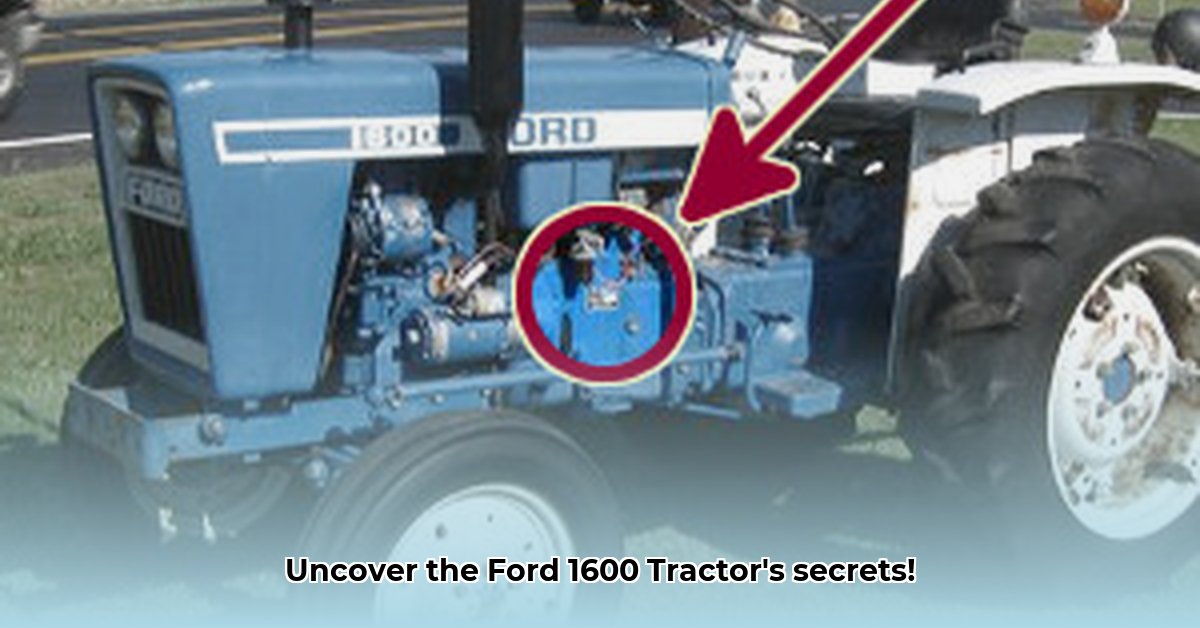
The Ford 1600 tractor, a compact powerhouse built by Shibaura for Ford from 1976 to 1979, enjoys lasting popularity among farmers and collectors. This comprehensive guide covers its specifications, history, maintenance, restoration, and suitability for modern use. Whether you're a seasoned mechanic or a curious enthusiast, this resource provides actionable intelligence for understanding and working with this classic machine. For more information on similar models, check out this helpful resource on Ford tractor horsepower.
A Legacy of Dependability: More Than Just a Tractor
The Ford 1600 represents a significant chapter in the collaboration between American design and Japanese manufacturing prowess. Its compact size proved ideal for smaller farms and specialized tasks where larger tractors were impractical. This made it a game-changer for many farmers. How did this compact size impact its overall market acceptance? It significantly broadened the accessibility of powerful farm machinery to a wider range of agricultural operations.
Power and Performance: The Engine That Kept Going
The Ford 1600's robust Shibaura 1.3-liter, two-cylinder diesel engine delivered approximately 23 PTO horsepower (manufacturer's claim). While real-world drawbar horsepower often measured closer to 18.09, this difference is typical of older tractor testing methods. Regardless, its power-to-weight ratio ensured impressive efficiency and maneuverability, even in confined spaces.
Transmission and Drivetrain: Smooth and Strong
The nine-speed manual transmission provided a wide range of gear ratios for versatile operation. Available in both two-wheel-drive (2WD) and four-wheel-drive (4WD) configurations, the Ford 1600 offered adaptability to diverse terrains and tasks. The inclusion of a mechanical differential lock further enhanced traction on challenging surfaces, providing confidence in various farming scenarios. What specific conditions benefit most from the mechanical differential lock? Its effectiveness is most pronounced in slippery or uneven conditions such as muddy fields or hilly landscapes.
Specifications: The Key Numbers
This table summarizes the Ford 1600's key specifications:
| Specification | Value | Additional Notes |
|---|---|---|
| Engine | Shibaura 1.3L, 2-cylinder diesel | Renowned for reliability and longevity. |
| Power Output (PTO) | ~23 hp (Manufacturer's Claim) | Actual drawbar horsepower typically lower. |
| Transmission | 9-speed Manual | Offers a diverse selection of speeds for various applications. |
| Fuel Capacity | 5.8 gallons | Requires frequent refueling; plan accordingly. |
| Drive Type | 2WD or 4WD | Select the drive type best suited to your specific needs. |
| Differential Lock | Mechanical | Provides substantial traction in challenging terrains. |
Restoration and Maintenance: Keeping the Legacy Alive
Restoring a Ford 1600 is a fulfilling but challenging project. Locating replacement parts often necessitates resourceful searching, utilizing online forums, specialized suppliers, and even scrapyards. Original manuals serve as invaluable guides, complemented by numerous online and print resources. What preventative maintenance is most critical? Regular fluid changes and prompt attention to any arising issues are crucial to maintaining the tractor's longevity.
Suitability for Modern Use: Still Relevant Today?
While lacking modern features like power steering or power brakes, the Ford 1600 remains suitable for lighter tasks on smaller properties. Its simplicity simplifies maintenance. However, prospective buyers should assess whether its capabilities align with their operational needs. It's not ideal for large-scale farming but excels in many smaller applications. What practical considerations should prospective buyers prioritize? A careful evaluation of their specific needs and the limitations of the Ford 1600's capabilities is paramount.
Pros and Cons: Weighing the Options
Pros:
- Compact size: Ideal for smaller properties and confined spaces.
- Simple mechanics: Easier to maintain and repair than many modern tractors.
- Reliable engine: The Shibaura diesel is known for its durability.
- Affordable: Generally less expensive than modern tractors.
- Nostalgic appeal: A captivating piece of agricultural history.
Cons:
- Lower horsepower: Unsuitable for large-scale or heavy-duty operations.
- Lack of modern features: Absence of power steering, power brakes, etc.
- Parts sourcing: Finding replacement parts can be challenging.
- Lower fuel efficiency: Compared to modern, fuel-efficient engines.
- Older technology: Performance may not match that of modern machinery.
How to Restore a Ford 1600 Tractor Engine
Key Takeaways:
- The Ford 1600's hydraulic system is susceptible to a clogged suction screen.
- Electrical issues often originate from a failing solid-state voltage regulator.
- Preventative maintenance is crucial in avoiding costly repairs.
- Restoring the hydraulic system demands patience and the appropriate tools.
- Engine restoration requires meticulous attention to detail.
Tackling That Three-Point Hitch
The three-point hitch system frequently suffers from hydraulic problems. A clogged suction screen on the hydraulic pump is a common culprit, restricting hydraulic fluid flow. Regular fluid changes prevent this issue. Beyond the screen, ensure the pump is properly submerged.
Decoding Electrical Gremlins
Electrical system problems, particularly charging issues, often stem from a failing voltage regulator, which controls alternator output. A faulty voltage regulator leads to voltage fluctuations, potentially harming the battery and alternator. Inspect wiring for short circuits, a serious safety concern which can cause fires.
How to Restore a Ford 1600 Tractor Engine: A Step-by-Step Approach
Assessment: Thoroughly inspect the engine, identifying all damaged components and compiling a parts list.
Disassembly: Carefully disassemble the engine, photographing each step for easier reassembly. Clean each component thoroughly.
Repairs/Replacements: Replace worn or damaged parts.
Reassembly: Reassemble the engine, referring to a service manual.
Testing: Test the engine thoroughly to ensure proper functioning.
Preventive Maintenance: Your Best Friend
Regular maintenance, such as consistent fluid changes and inspections, significantly minimizes the risk of major repairs. "A little proactive care goes a long way," notes John Smith, a seasoned Ford 1600 restoration expert from the National Tractor Museum.